Artist Biography

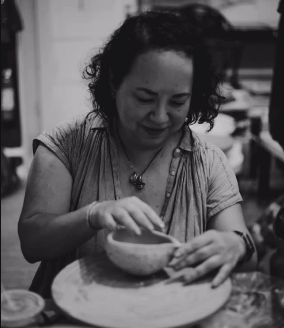
Christine Aiko Beck was born in London, raised in California, and spent her childhood eating mandarins in her grandparents' orchards in Japan. Influenced by her father's collection of Hagi Yaki and her observations of tidepool creatures from California to Japan, she has always lived between worlds. This lived experience of diaspora— of moving between countries, languages, and identities—became the foundation of her artistic practice.

After leaving jewelry design, Beck found her voice in ceramics by embracing organic imperfection, heavy texture, and the unpredictable beauty of high-fire glazes. She is in a relational resistance to the discipline's traditional emphasis on uniformity and control.

Her work has been featured in exhibitions at The Berkeley Art Center, The Berkeley Potters' Guild, The Potters' Studio in Berkeley, the Ceramic Studio in Oakland, and most recently won the Jurer’s Award at the Bedford Gallery in Walnut Creek .
Artist Statement

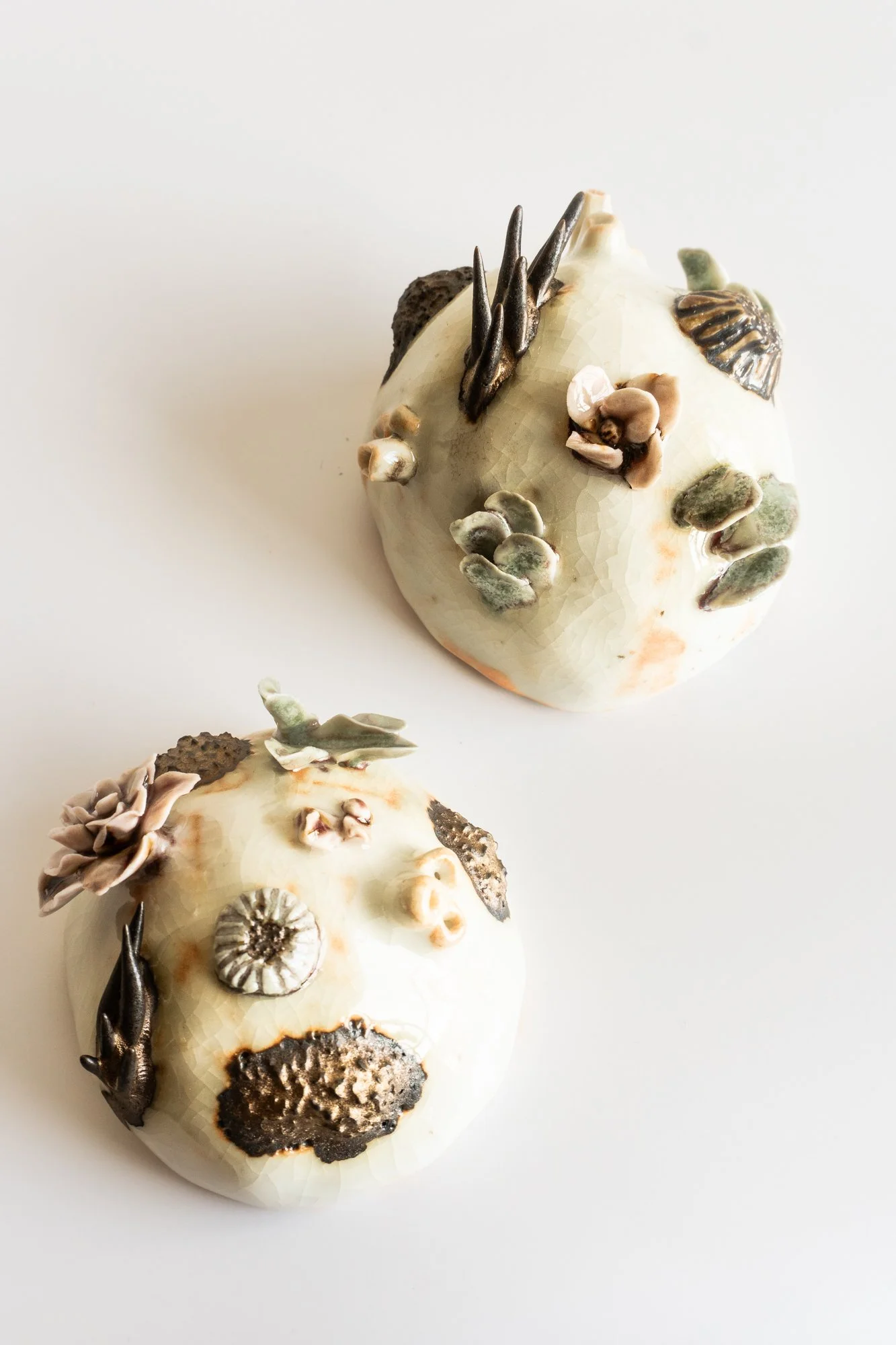
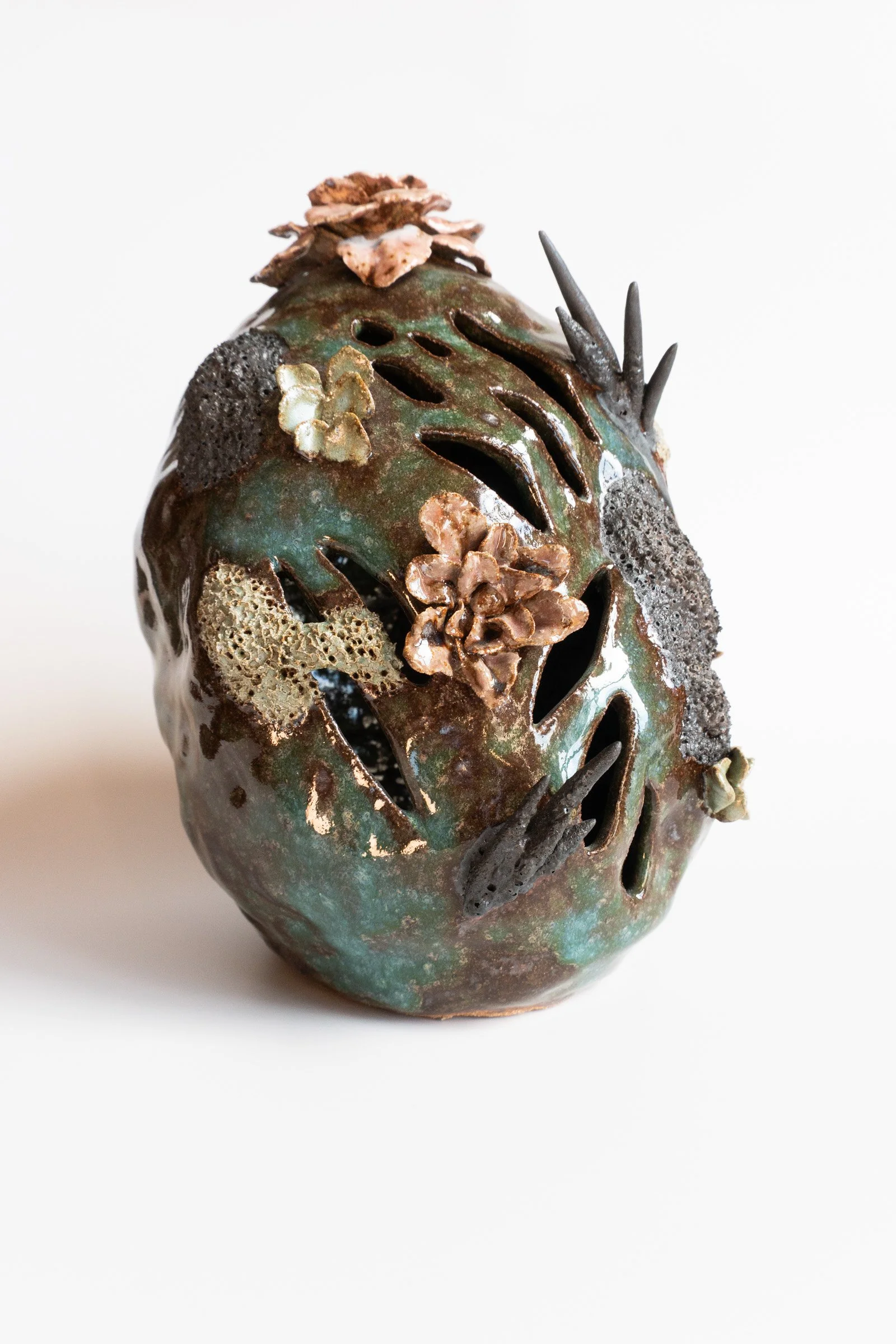
These sculptures emerge from a refusal of binary logic. Formally, they resist categorization: part organism, part vessel, simultaneously oceanic and terrestrial, ancient and newly born, swimming and flying.

Methodologically, they resist planning, sketching, and design rationality. Through this practice, I'm discovering something I grew up around but Western conditioning taught me to ignore: that these forms possess their own presence, their own being. They are not objects I author but beings I encounter. The clay, the fire, the glaze all possess agency. I am witness as the creatures appear, as they breathe. As they exist.

This refusal of authorial mastery extends to how I understand myself—as a diasporic subject navigating multiple registers, learning through play to inhabit contradiction rather than resolve it. The sculptures enact what I'm learning to practice: full presence without apology, existence without justification. These are objects that demand nothing. They perform no function. They simply insist on their right to exist, fully present and against the demand that all things justify their being through utility.